Therapist vs Life Coach: What's The Difference
You may have asked yourself, “What's the difference between a life coach and a therapist?” And it's very likely you've rarely - if ever - heard of life coaching for adolescent youth. But as parents, we are all looking for any and all resources to set our children up for success in life
By providing perspective on the difference between life coaching and therapy - as well as the purpose and benefits of both - this post will help you make informed decisions about getting your child the resources they need be mentally healthy and survive life after leaving your home. Sound good? Let's get to it...
Therapy vs. Coaching - Similarities
Both therapists and coaches strive to enhance the well-being of clients. Some coaches are also therapists and vice versa. In addition, the same client may work with both a therapist and a coach to address different needs.
Therapy vs. Coaching - Primary Differences
The primary difference is what the provider works on with their client. Therapists focus on helping people heal, while life coaches focus on helping them reach goals. Life coaches do not have mental health training and are not equipped to diagnose or treat mental health conditions (unless a life coach was previously trained as a therapist, which is also common).
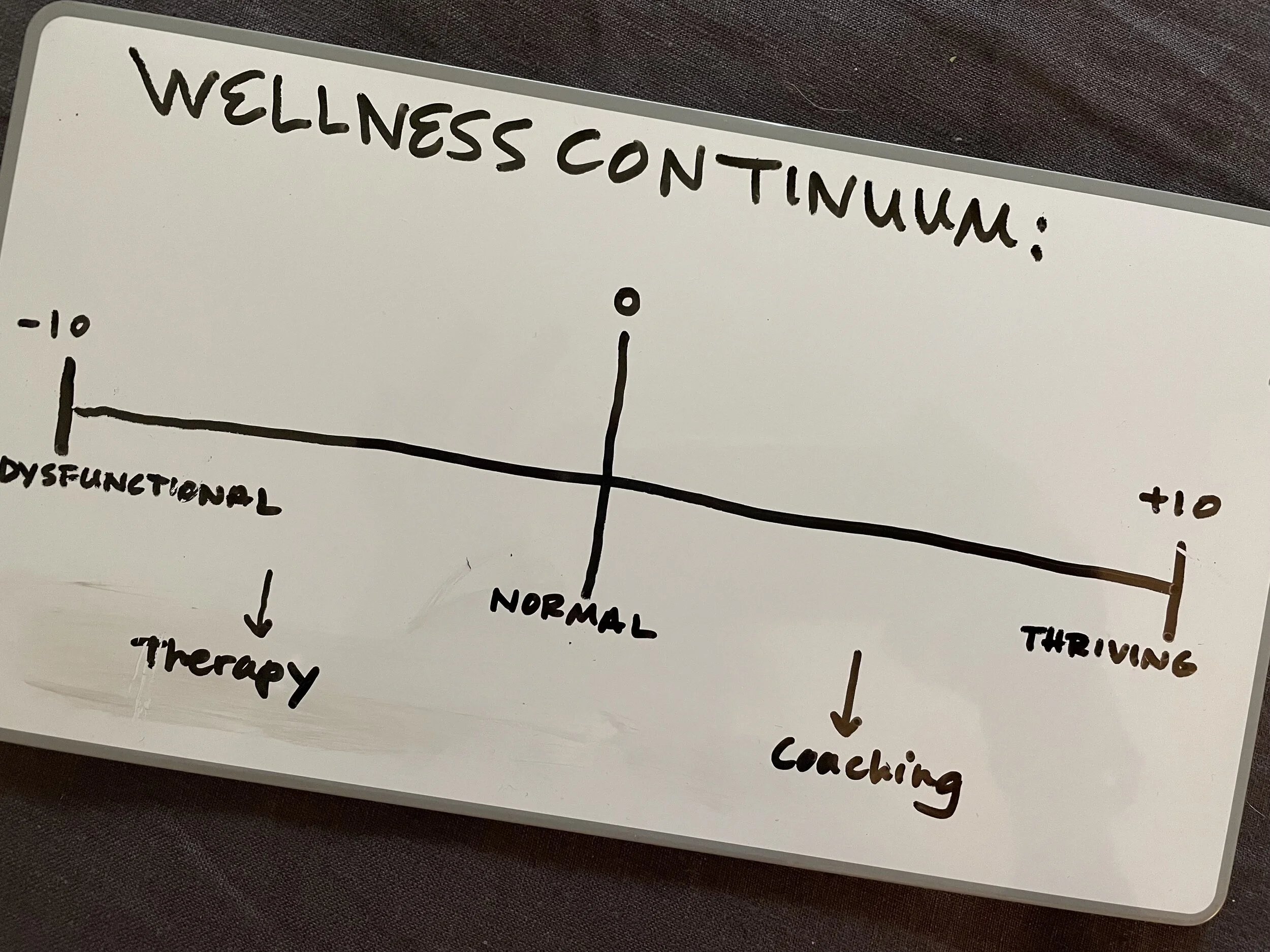
But before we get to those details, first think of your child's mental wellness on a continuum* with the midpoint as (0), representing normal functioning. Negative numbers are dysfunctional, and positive numbers are thriving. As the chart below illustrates, therapy helps individuals get to normal functioning, while the goal of coaching is to guide clients towards going further to thrive in life.
Dynamics of Therapy
Addresses mental health issues, or dysfunctions, to bring clients back to normal functioning (0)
“Directive” with the therapist “in charge” of a plan to allow for proper functioning, which may include medications, specialized therapies, etc.
Whether it's psychotherapy from a psychiatrist, or talk therapy from a psychologist, therapy works on the issues causing dysfunctions in the patient's life. Dysfunctions include depression, severe anxiety, trauma (from bullying, for instance), ADHD, and so on.
If you suspect your child is suffering from a mental health issue, the best place to start is a psychiatrist that can diagnose them and devise a mental health plan.
Dynamics of Coaching
Helps clients move into positive numbers to thrive, through empowering guidance and strategies
Helps clients take a proactive role in their lives, and move from “just getting by” to being in charge and focusing on what's important to them
Fills in the gaps for understanding critical life skills that are NOT typically taught in school
Coaching helps clients get out ahead of life's pitfalls. For instance, teens that are more self-aware, more confident and have a higher level of self compassion will be better prepared to meet life's challenges head-on. Coaching clients understand that little set-backs don't define them, and therefore are less likely to be devastated by them. This is an important point, especially after seeing the impact of the CoVid pandemic on youth (see Suzy's recent blog for more).
The benefits of youth coaching are broad-reaching. Through coaching, youth can experience enhanced…
confidence
self-regulation
optimism
self-awareness
social & emotional skills, including social media strategies
time management & organization
stress management
motivation & performance
relationships with friends & family.
There are many life coaches, but if you are interested in one for your adolescent child, you'll want to find a certified youth coach. Specific titles vary, but it's important that the coach was certified through a program specializing in the young adult age group, approximately 14 - 24 years old. For instance, Suzy and I are Certified Professional Youth Resilience & Mentor Coaches and deliver coaching services and therapy sessions. Our evidence-based youth life coaching sessions and training program was approved by the International Coach Federation and the Center for Credentialing and Education.
Can Parents Do Coaching Themselves?
A commonly asked question from parents is, “Can I do life coaching for my child myself?” The answer, as with anything related to teens and young adults, is not a simple one. Unfortunately many kids do not trust their parents to give them advice. This includes kids with healthy relationships with their parents. And when kids don't feel they can be transparent about all of their concerns with their parents, they are vulnerable.
The best case scenario for young adults is to have a team of trusted adults to rely on consistently, including their parent/s AND another objective adult mentor. While a close family friend or relative may be wonderful for them to lean on occasionally, an objective, non-judgemental certified youth coach is much better equipped to appropriately guide a young person in the midst of mental health challenges.
We know this was a lot to take in. But hopefully you found this post helpful. We look forward to hearing from you with questions about mental health care and other mental health concern!
If you are struggling with any mental health conditions, it may be helpful to speak with a mental health professional to provide mental health treatment, support and guidance.
*Wellness Continuum SOURCE: Youth Coaching Institute, LLC